Dec
5
From Fireside Chats to TikTok: Reflecting on Political Discourse in the Digital Age
Filed Under Deliberative Democracy, From the Field | Leave a Comment
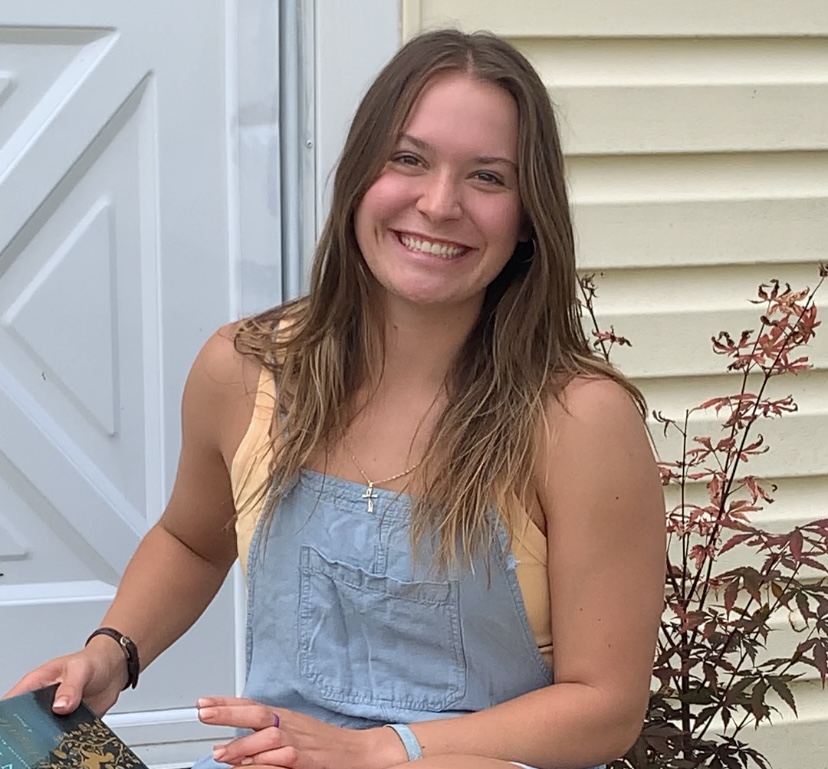
Liz Donofry is a junior majoring in Studio Art
This post is the second of this season of From the Field. If you have not yet done so, please read this brief post by the series editor introducing our focus for the season.
This episode of The Gray Area features Harvard professor of political science Jane Mansbridge, who was previously the president of the American Political Science Association, and co-editor of the book, Deliberative Systems: Deliberative Democracy at the Large Scale. Given her extensive background within the field, the episode is an interview framed around themes of deliberative democracy as a cultural orientation toward more reasoned public discourse. The dynamic between Mansbridge, being a full proponent of deliberative democracy, and the host, being a skeptic, was unexpected to me, and listening to the episode made me wrestle, question, and contemplate my stance on the issue, pulling from information that I have only freshly learned during my time in Polling and Public Opinion. Between the course and the podcast episode, there were correlating themes, such as media influence on nationalism,
polarizations between citizens and political elites, and the vitality of interpersonal communication and public competence in upholding sovereignty for the future. Below, I analyze each of the themes and evaluate the episode as a retrospective of the course.
In the episode, there was a disagreement that anchored the tone of the conversation and led me to wonder what the driving forces of polarization are. The host proposed that social communication and media influence on the public causes nationalization, which in turn causes polarization (16:09). Jane Mansbridge countered, saying the linkage between each is not strongly related and there is a difference between the linear progression of nationalization and the u-curve of polarization. She also expressed that although the media is polarizing, it does not secure a link between nationalism and political polarization. Mansbridge raises the point that President FDR’s fireside chats utilized media in the form of a radio broadcast, which brought the nation together (17:14). His actions are no small feat, as the country adored a new kind of bridge between political elites and the public – and, I think, was a successful way for technology to be put to good use. Using the tools available to increase communication and political literacy in the public is a tactic Mansbridge mentions later in the episode, and how it should be practiced more in the future for encouraging a conversive society between parties, constituents, and levels of government (42:30). This association reminded me of our discussion of measuring the role of the public and policy through certain schemas and lenses. In class, we learn that Congress is best represented ideologically in a U-curve and the public, in a bell curve (April 17, 2025, Lecture, Polling and Public Opinion). Both are examples of polarization and present challenges in finding common ground, as the public falls within the middle, moderate range, but Congress is more divided between extremes.
However, in recent years, since FDR’s fireside chats, there has been a steady rise in direct communication between political candidates and the public through social media platforms
such as X and even TikTok. Barberá and Steinert-Threlkeld (2020, 711) comment on the growing number of political leaders who actively use social media and note how the increase has allowed politicians to promote themselves without relying on traditional journalism or news, thereby fostering a sense of accessibility and connection with average citizens. While this link can enhance the perception of equality between political elites and the public, it does not necessarily translate into greater structural equality or influence over policy outcomes. So, while political communication with the media has been a proponent of nationalism and polarization, one cannot attribute their interrelatedness.
Thinking normatively about equality and the use of media as a means of providing a level voice to both politicians and the public, the humanity and identity relationship that is found in the public is also found in politicians. Mansbridge stresses that political leaders are humans too, and not just partisans (23:30). Although the internet and social media have somewhat “leveled the playing field”, empirically, there is still polarization in media, as people living in cities versus rural communities have felt differently about the idea of the media and their involvement in policy. People moving to a city from a more rural place experienced more isolation, and the shift in alignment with rural communities to “the public,” and people in a city behave as “the masses” (Glynn et al. 2015, 342-343). The delineation between “masses” being held less convicted and having a lower sense of personal responsibility than the public is one we learned about early on when discussing popular sovereignty – rooting the legitimacy of government in the consent of the people.
The idea of deliberative democracy and popular sovereignty pair well together concerning the amount of responsibility that one feels for the outcome of the government’s decisions. If we are to humanize the politicians as Mansbridge is encouraging us to do, then we can see the need for each citizen to be aware of their actions and opinions, and see the power they hold (Tocqueville 2010, 91-97). Contemplating that idea compels us to examine how many young people are empowered to become political leaders. Who will want to be a contributor in politics if they are not being represented? What politicians are inspiring the cultivation of future generations of leaders?
A polling type that accounts for this self-expression and the public’s ability to engage meaningfully with complex policy issues, Mansbridge shares, are deliberative polls that are composed of individuals who might not normally engage in political discussions, but who are incentivized to participate through structured opportunities. As a result, they often leave more informed than they came, contributing to belief updating and less polarization, which opens them to future compromise. (30:34) Public consensus demonstrates the benefits of deliberative democracy to promote more thoughtful and inclusive public engagement than jury duty, for example. Mansbridge finds that the attitudes towards the different polling methods are completely different, even though they are both randomly chosen. I have had personal experience with jury duty and affirm that it is more dreaded and burdensome for individuals, while a deliberative poll with incentives, I could imagine, would be an exciting environment
someone chooses to experience, versus just being forced to.
Another point of contention is the level of demands required from a person, including time, money, and commitment. She poses the hypothetical idea of intervention with a state representative, and if there could be more communication between them and their constituents, then that would lead to a higher sense of personal responsibility (38:30). Both agree that fewer demands within polling lead to more people wanting to engage in political surveying, and will produce a better representation, and having higher demands will lead to fewer participants and also will not reap beneficial results, bringing on the extremes.
Again, referring to the u-curve, and how media has allowed for polarization and mass media to function correlatively with others. Glynn states, “Correlation tends to produce social consensus—not necessarily unanimity of opinion, but at least some shared sense of where people stand” (Glynn et al. 2015, 341). At the root, the level of investment one person has in the policies that are made, shape their willingness to participate in polling, their desire to vote, and ultimately, the health of a functioning democracy. The fundamental challenge of developing a healthy, engaged, and informed public remains as pressing today as it was in the past. Addressing a polarized world requires a cultural shift in how we listen, not just how we speak. As we continue into an increasingly digital future, the challenge will be not just how we speak to one another in person, but also our online interactions. While the media’s influence on political discourse is undeniable, the evolution of FDR’s fireside chats to today’s social media platforms clearly shows how the tools of public communication have altered the message and impression political leaders portray. Sustaining a functioning democracy requires more than simply absorbing what media algorithms produce, but decisively choosing to engage healthily with media for the betterment of oneself.
Mansbridge advocates for more nuanced understandings rooted in bipartisanship and shared responsibility, a perspective that finds practical expression in mechanisms like deliberative polling. Although deliberative democracy may not be suitable for every political issue, these methods offer a promising way forward for inviting informed public engagement. These approaches encourage citizens to be active participants in the democratic process, utilizing media technology in enlightening ways, rather than merely passive recipients of information and doom-scrolling. By fostering inclusive and open discussions among citizens, we can establish a nation of strong and legitimate political decision-makers.
References
Glynn, Carroll J., Susan Herbst, Mark Lindeman, Garrett J, O’Keefe and Robert J. Shapiro. 2018 Public Opinion. Routledge.